- Where
- 11 km north of San Juan del Sur
- Type
- Beach break, sand with rocks at the ends
- Waves
- Lefts and rights, several peaks
- Best tide
- Mid tide, pushing in
- Best swell and wind
- South to southwest swell, east wind
- Water
- About 80 to 84°F, no wetsuit
How the wave works
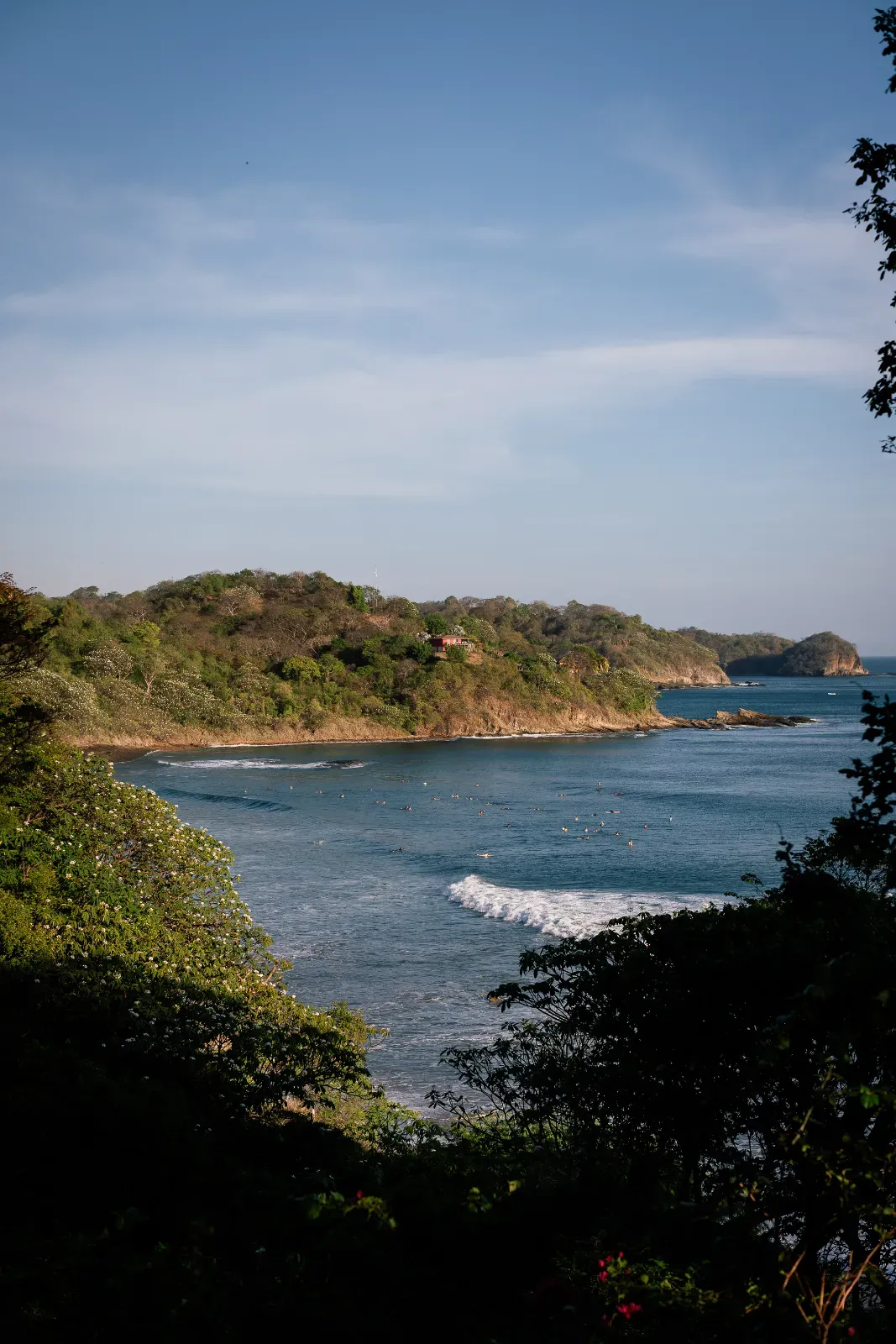
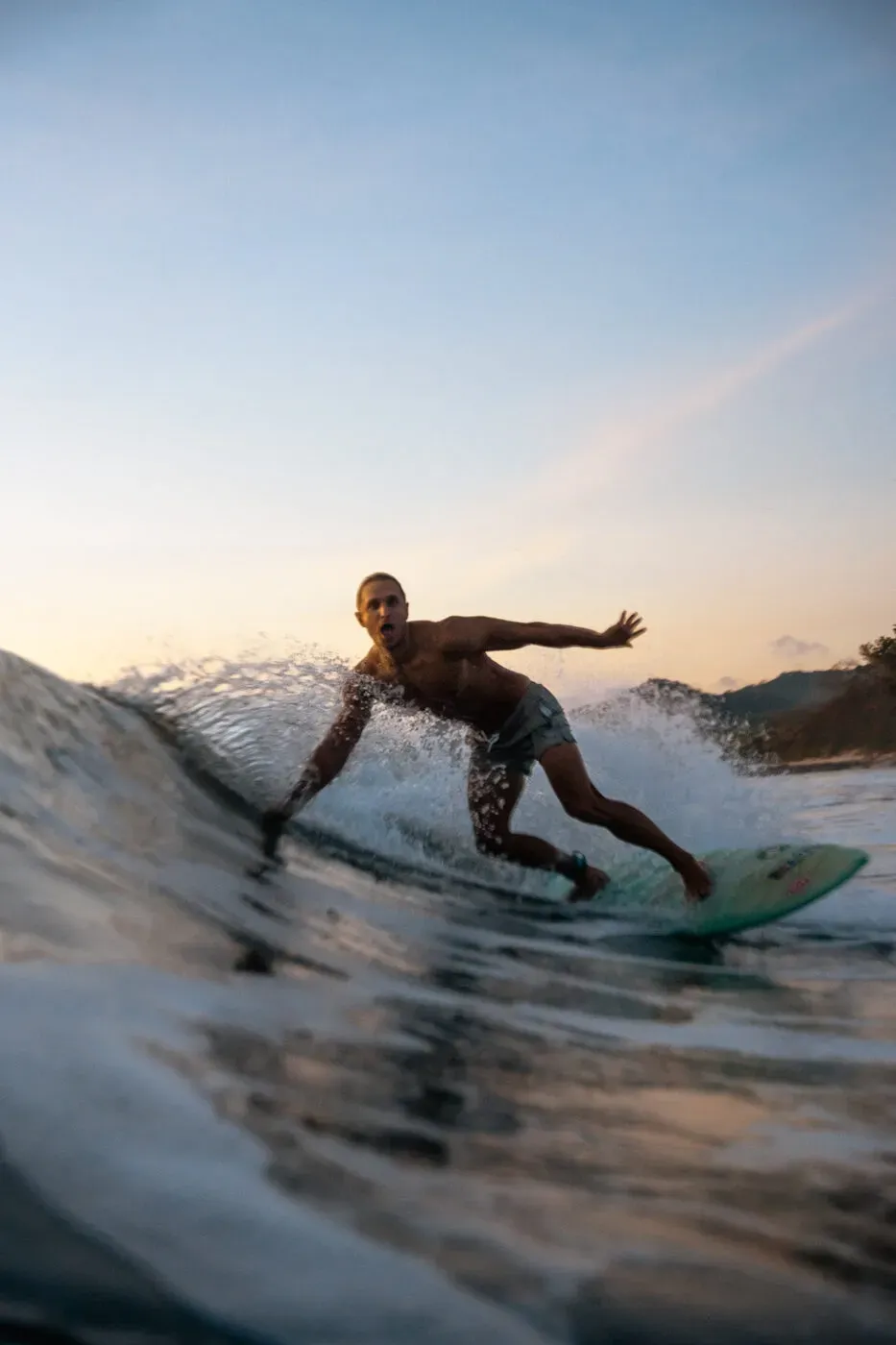
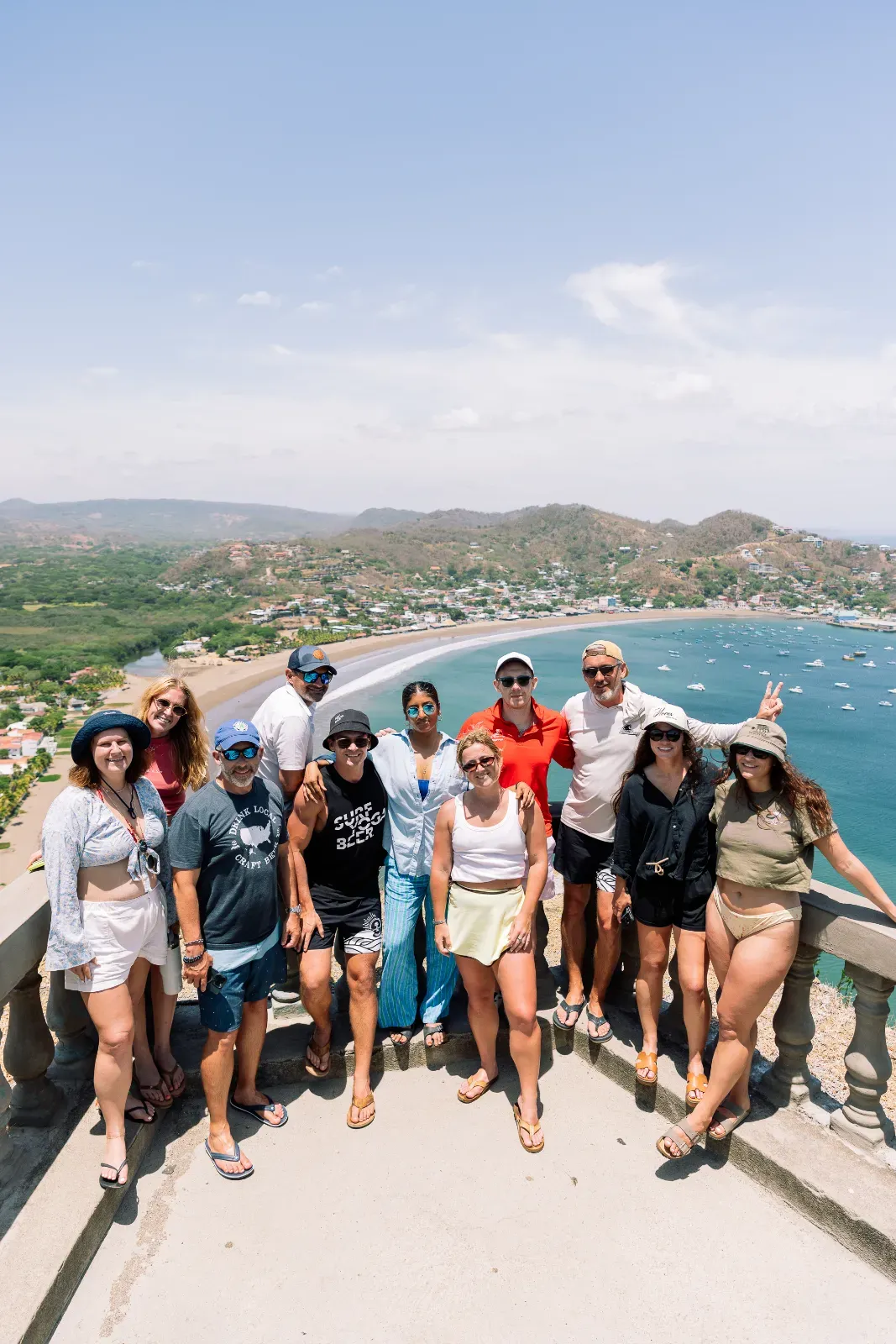
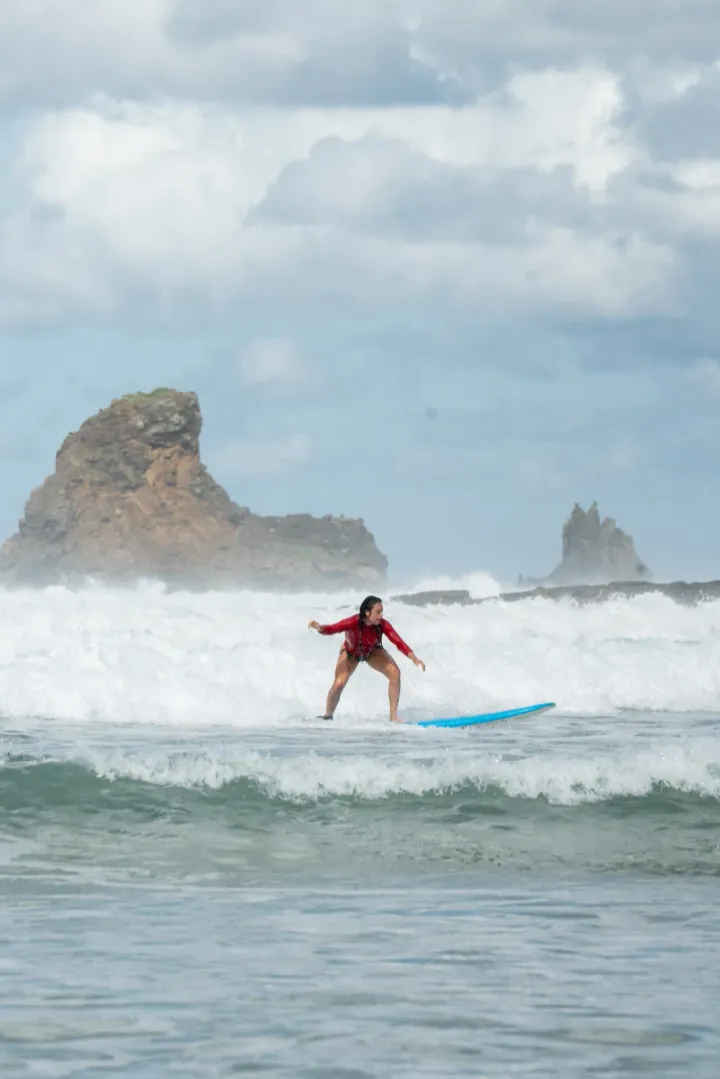
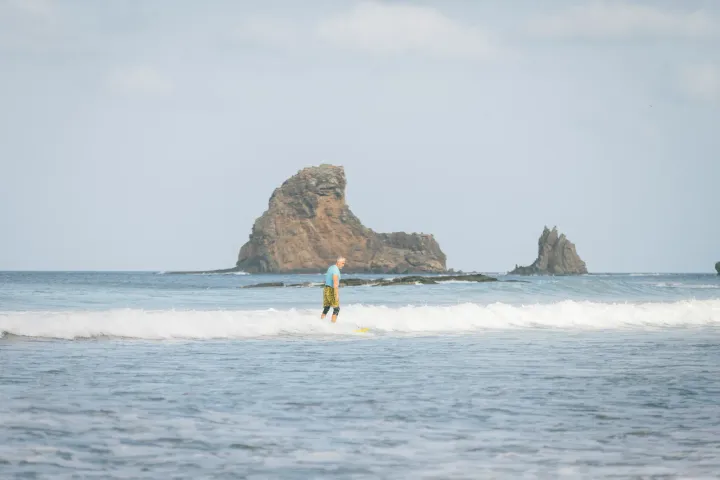
Playa Maderas is a horseshoe-shaped bay facing west-southwest, with a beach break running most of its length and a big rock, Maderas Rock, sitting in the middle of the view. The bottom is mostly sand with rocky sections at both ends, so the banks move around and there are usually a few peaks to choose from.
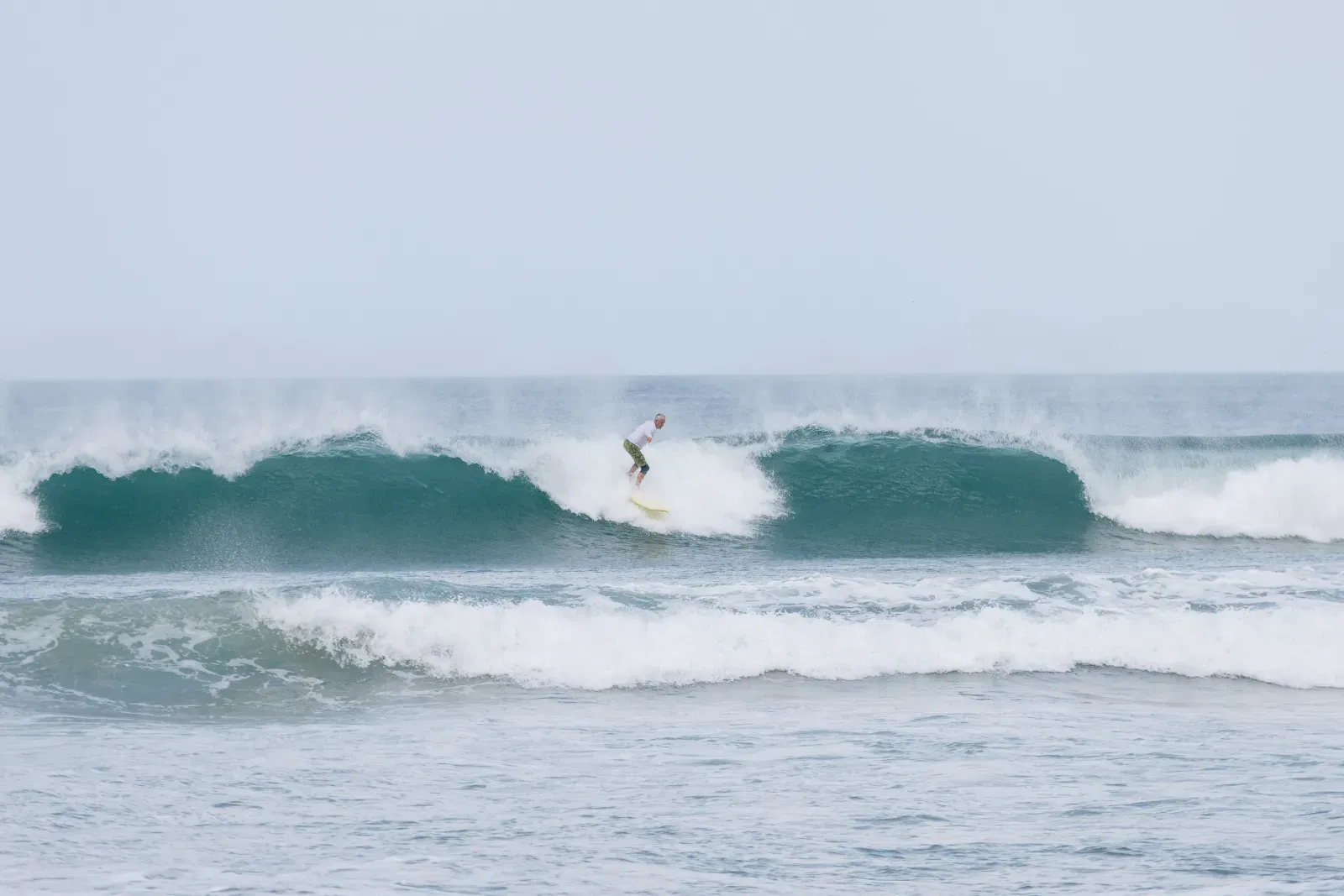
The main peak in the middle of the beach is best known for its right. The south end has a shorter, faster left and gets rocky. The north end is usually softer and less busy. On a normal day there is whitewater on the inside for people learning to stand up and open faces out the back for people learning to turn, which is why so many surf schools use it.
Wind: why it is so often offshore
Trade winds from the Caribbean blow across the low land around Lake Nicaragua and out to sea on the Pacific side. At Maderas that means an easterly wind, which blows offshore and holds the waves up. In the dry season, roughly December to April, it can blow strong all day. From April onward it eases, and mornings are usually the cleanest time to surf.
Tides
Mid tide is the sweet spot, especially as the tide pushes in. At dead low the rocks show and the waves tend to close out. At high tide the waves get softer and can turn into shorebreak. Surf coaches here plan the day around the tide chart, which is why camp sessions do not always start at the same time.
When to surf Playa Maderas
| Months | Waves | Wind and weather |
|---|---|---|
| December to March | Smaller, cleaner swell. Good for beginners. | Strong offshore wind, dry and sunny, water a little cooler. |
| April to May | South swells start to fill in. More size and consistency. | Lighter offshore wind, hot. Rain starts in the second half of May. |
| June to October | The biggest, most consistent swell of the year. | Green season: afternoon and evening rain, light wind. |
| November | Swell eases, conditions get cleaner. | Rain tapers off, offshore wind returns. |
We run our surf camp in May on purpose. Here is what surfing Nicaragua in May is really like.
Learning to surf at Maderas
Most beginners learn in the whitewater in the middle of the beach on a big soft-top, then move to unbroken waves on the shoulder as they get comfortable. A coach makes a big difference here, mostly by putting you on the right peak at the right tide and keeping you away from the rocks and the busiest takeoff zones.
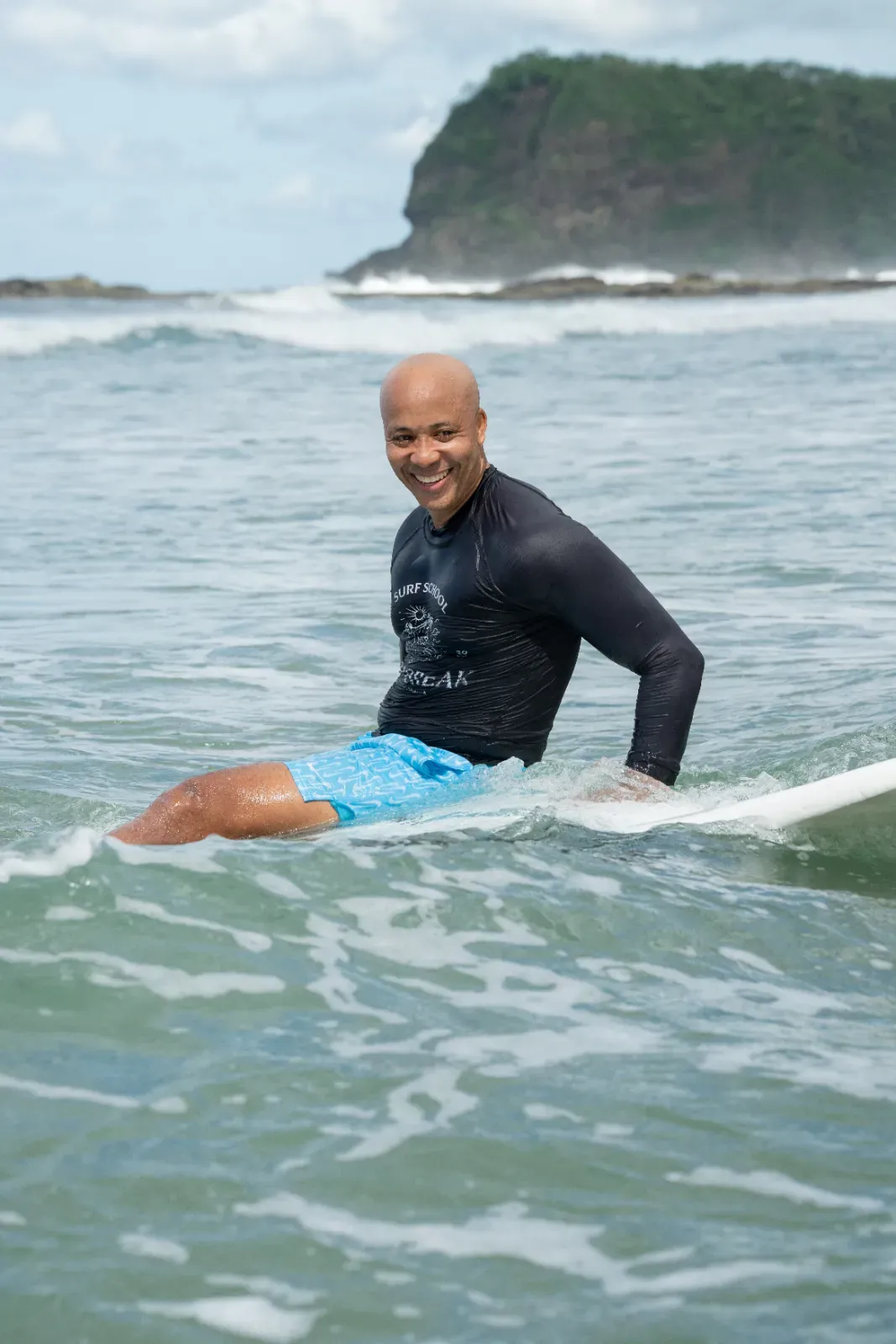
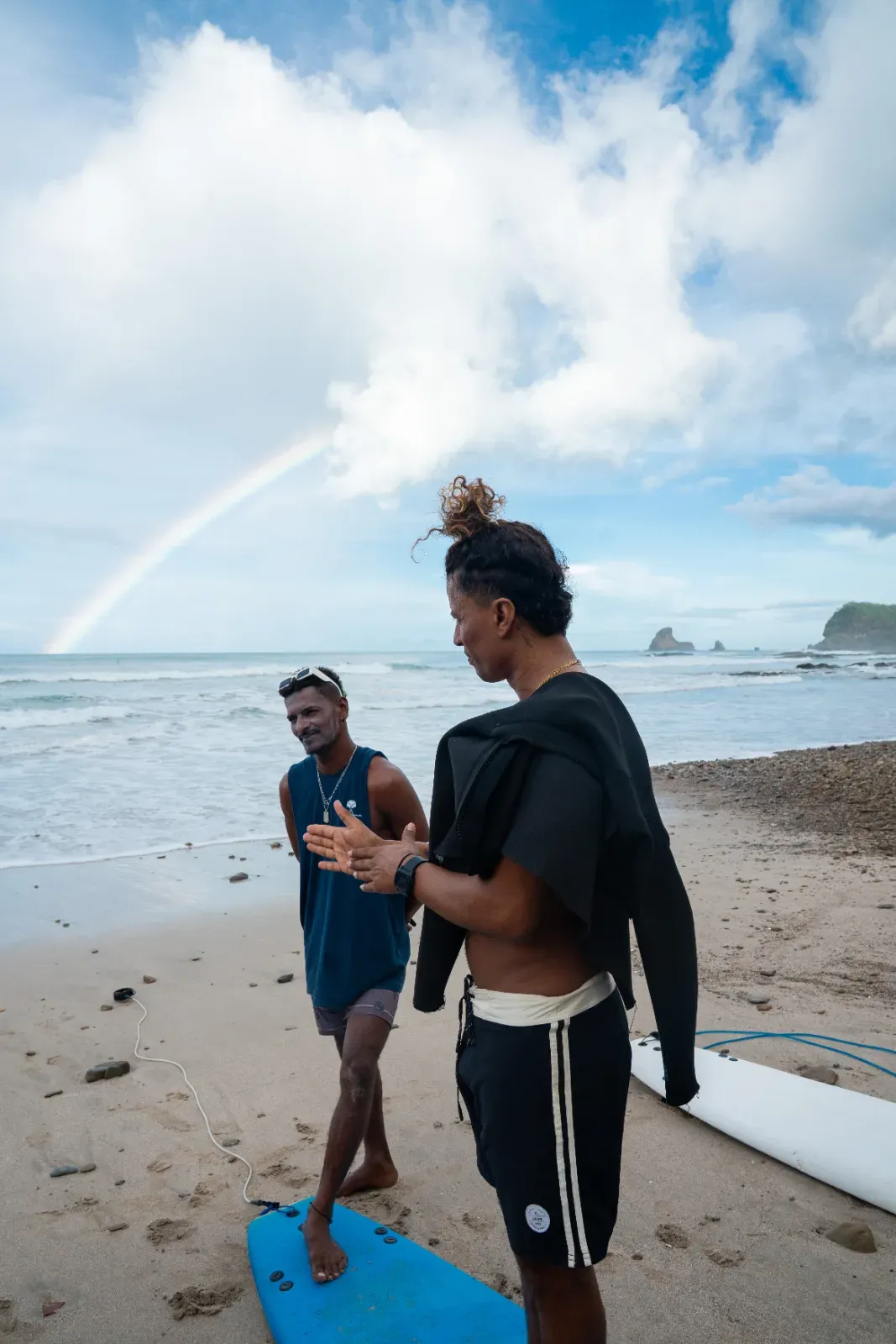
We work with Beach Break Surf School, a local crew right on the beach led by Nelson. On our Nicaragua Surf Camp you surf with them twice a day, get filmed, and review the footage before the next session.
Surf Maderas with us in May
Nica Surf Camp: six days at Playa Maderas with two coached surf sessions a day and a villa on the cliff above the beach. May 4–9 or May 9–14, 2027, from $1,950.
Things to know before you paddle out
- Rocks sit at both ends of the bay and show at low tide. Stay in the middle of the beach until you know the spot.
- Shuffle your feet when you walk out. Stingrays like warm, sandy shallows.
- The lineup gets busy from mid-morning. Dawn sessions are calmer.
- The sun is strong. Wear a rash guard and reef-safe sunscreen, and drink more water than you think you need.
Where people hang out
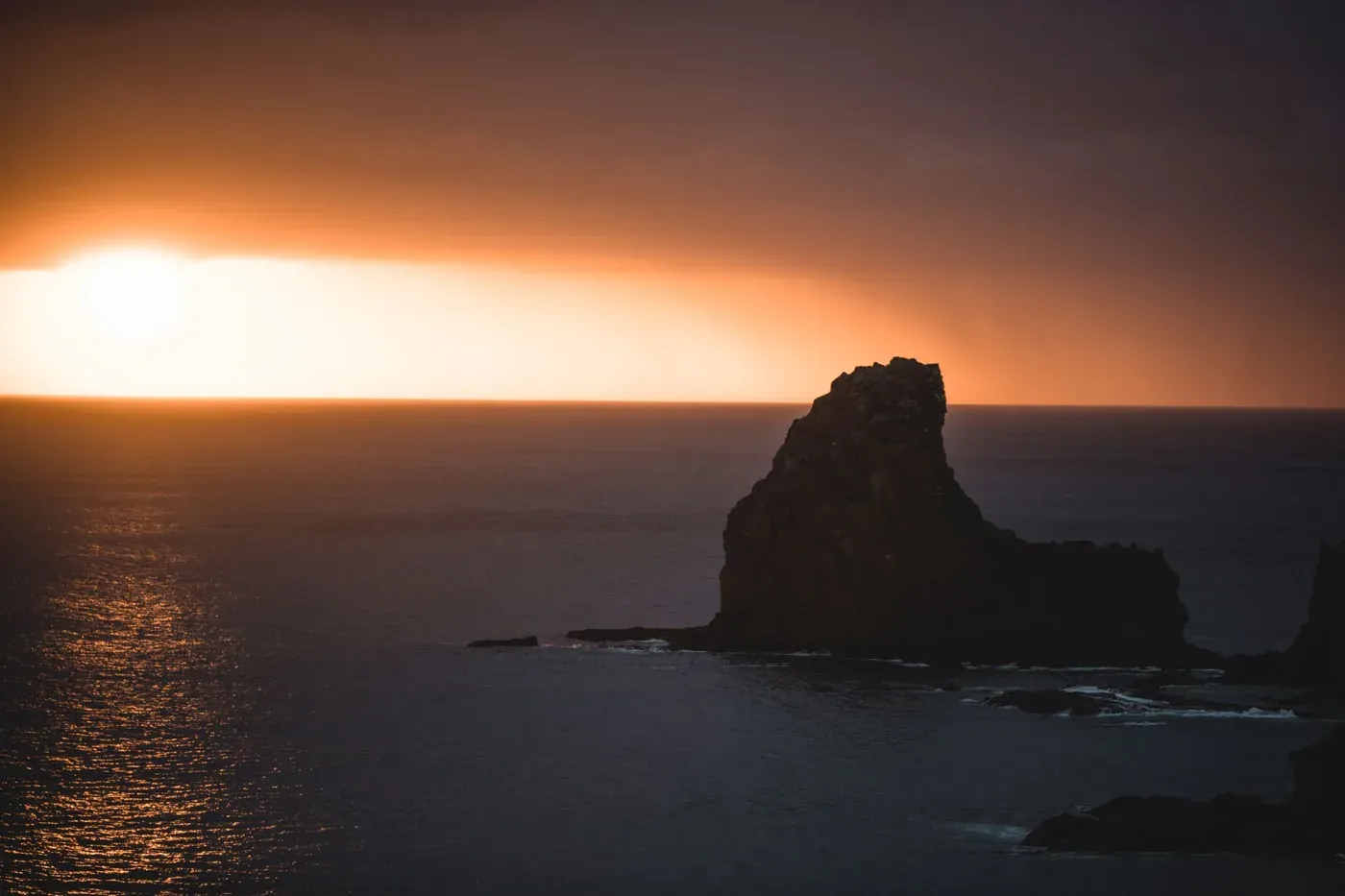
Playa Maderas is small: a strip of sand, a few beach bars and surf shacks, and hotels tucked into the jungle on the hills. These days most people end up at Espejo, which looks right over the surf. Sunset from the beach, with the light behind Maderas Rock, is the main event every evening.
Getting to Playa Maderas
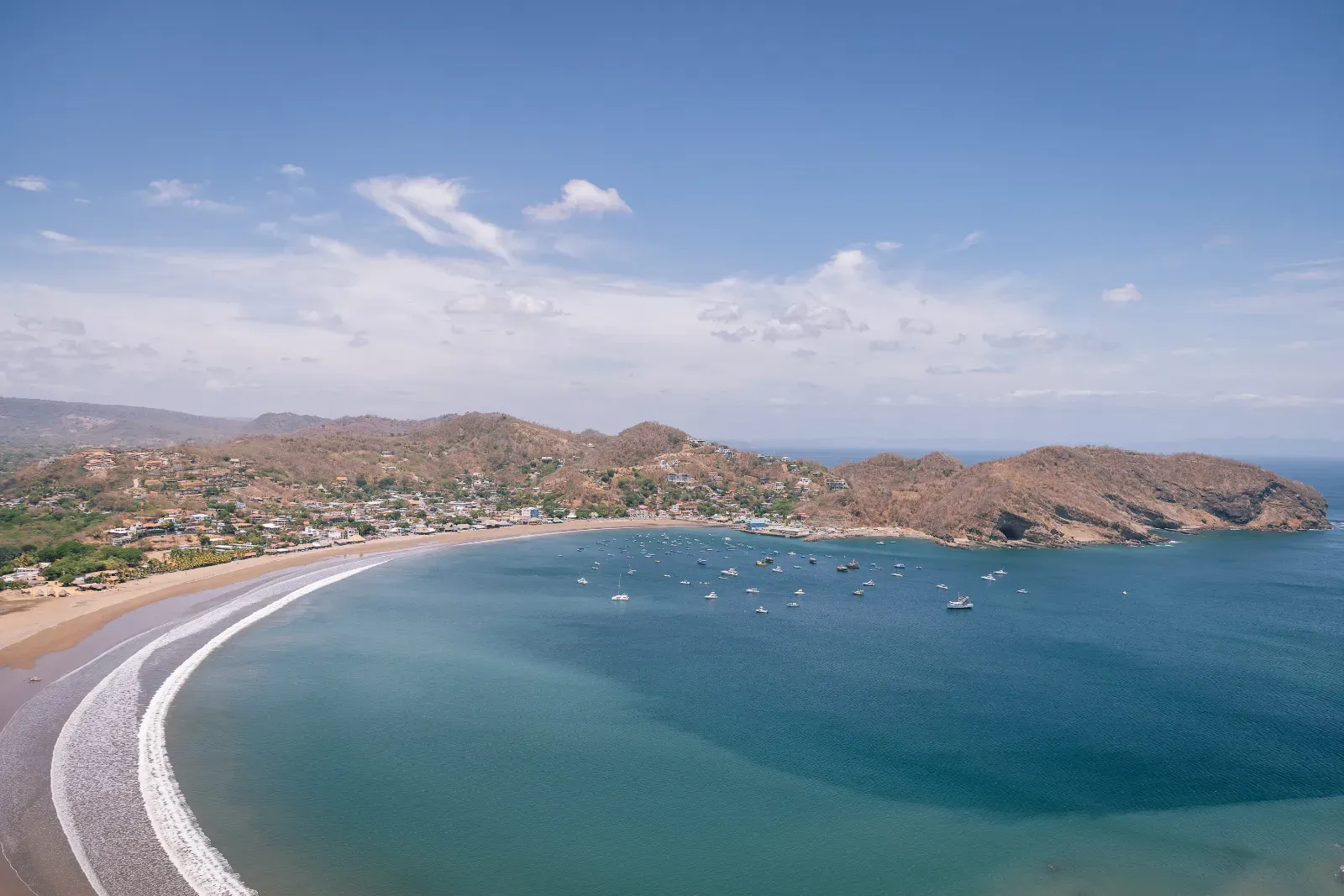
From San Juan del Sur: about 11 km by road, 25 to 40 minutes. The last section is steep dirt and gets slippery in the rain, so a 4x4, a taxi or a surf shuttle from town is easiest.
From Managua (MGA): about 2.5 to 3 hours by road. This is the simplest way in from the US.
From Liberia, Costa Rica (LIR): about 1.5 hours to the Peñas Blancas border, then the crossing, which can take one to three hours, then about an hour to Maderas. Carry small US bills for the border fees.
US citizens do not need a visa for a short stay in Nicaragua and pay a tourist card fee of about $10 on arrival. Check the rules for your own passport before you fly. On our surf camp the airport shuttles are included as long as you land by 2pm.
Other breaks nearby
- Playa Marsella: the next bay north, walkable from Maderas and quieter.
- Playa Majagual: another neighboring bay with a long, quiet stretch of sand.
- Playa Remanso: south of San Juan del Sur, mellow and good for beginners on the right tide.
- Playa Hermosa: a long beach with lots of peaks south of town, private road with a small entry fee.
- Playa Yankee: further south, heavier and better for intermediate surfers and up.
Comparing places to learn? See how the surf camps in Nicaragua compare, from Maderas to Popoyo.
Open Playa Maderas in Google Maps
Playa Maderas FAQ
Is Playa Maderas good for beginners?
Yes, with a coach. The whitewater on the inside is a good place to learn and the bottom is mostly sand, but the outside peaks get punchy and there are rocks at both ends of the bay. Beginners do best in a lesson, in the middle of the beach, at mid tide.
How far is Playa Maderas from San Juan del Sur?
About 11 km by road, usually 25 to 40 minutes. The last stretch is a steep dirt road that gets slippery after rain, so most people take a shuttle or a taxi.
What is the best tide to surf Playa Maderas?
Mid tide, especially on the push from low to high. Dead low tide exposes rocks and tends to close out, and high tide can get soft and shorebreak-heavy.
Which swell and wind work best?
South to southwest swells, with an easterly wind blowing offshore. Nicaragua gets offshore wind on most mornings, and in the dry season often all day.
Do I need a wetsuit at Playa Maderas?
No. The water is usually around 80 to 84°F. Boardshorts or a swimsuit and a rash guard for the sun are enough. In January to March the water can feel cooler, but a rash guard or a thin top is still plenty.
When is the best time to surf Playa Maderas?
Every month has rideable waves. December to April brings strong offshore wind and smaller, cleaner swell, which suits beginners. April to October brings bigger south swells and lighter wind, with rain from late May. See our guide to surfing Nicaragua in May.
Is Playa Maderas crowded?
It can be, because it is the closest consistent surf to San Juan del Sur. The lineup is busiest mid-morning when the town shuttles arrive. Dawn sessions are much quieter.
How do I get to Playa Maderas from Managua airport?
About 2.5 to 3 hours by road from Managua (MGA). Liberia, Costa Rica (LIR) is the other option, about 1.5 hours to the Peñas Blancas border, the crossing itself, then about an hour to Maderas.