The best time to surf Nicaragua.
This is the question we get more than any other, and people are always braced for a complicated answer. It isn't complicated. Nicaragua's Pacific coast has warm water and rideable waves every single month of the year. You are not going to fly down here and find the ocean closed.
What changes between seasons isn't whether you'll surf. It's the flavour. So here's the honest breakdown.
November to April: the dry season
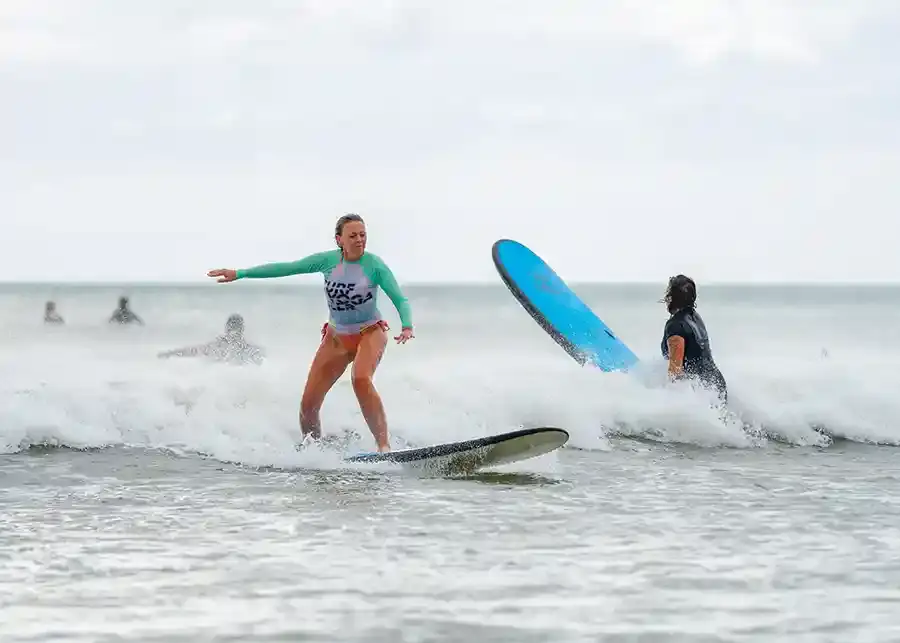
Blue sky on repeat, barely a cloud, and swell that's a touch smaller and friendlier on average. If you have never stood on a board in your life, this is the window people quietly recommend. Smaller, cleaner, less intimidating. You'll spend more of the session actually surfing and less of it getting worked.
It's also the busiest window on the coast generally, which sounds like a warning but mostly isn't. Maderas is still Maderas.
May to October: the green season
Southern hemisphere swell shows up and the waves get bigger and more consistent. This is the improvers' window. If you can already stand and you want real, punchy waves to work with, come now.
Yes, it rains. Not the way people imagine. It tends to arrive as a heavy afternoon dump that clears out, and the mornings are frequently glassy and perfect. Everything goes ridiculously green. Fewer people around. It's arguably the prettiest the country ever looks.
Nov to Apr. Smaller, sunnier, gentler. The lowest-stress way to learn.
May to Oct. More size, more power, more to work with. Mornings are often glass.
Around 28°C year-round. Board shorts. No wetsuit, ever. Not once.
Offshore roughly 300 days a year, which is the real reason any of this works.
That last point deserves more than a box. Nicaragua sits between the Pacific and Lake Nicaragua, and the temperature gap between the big cold ocean and the big warm lake drags wind across the country and straight out to sea, most days of the year. Offshore wind holds a wave's face up and grooms it into something clean, slow and makeable instead of a crumbling mess.
Most surf destinations get that for a few hours at dawn if they're lucky. Nicaragua gets it almost all day, almost all year. It's a geographic fluke and it happens to be the single best thing that can happen to someone learning to surf.
So the real answer: come when you can get the time off. Then let us know your level and we'll tell you honestly what your week will look like.
↑ Back to top